


Route optimization is often where the logistics decarbonization efforts begin. It is measurable, visible, and improves efficiency quickly. However, it cannot tackle the biggest source of emissions on its own. The larger impact comes from network design, such as rethinking warehouse locations, inventory flows, and distribution structures to reduce emissions across the supply chain.
As companies look beyond short-term improvements, network design emissions reduction is becoming more important for long-term logistics decarbonization.
The Limits of Route Optimization
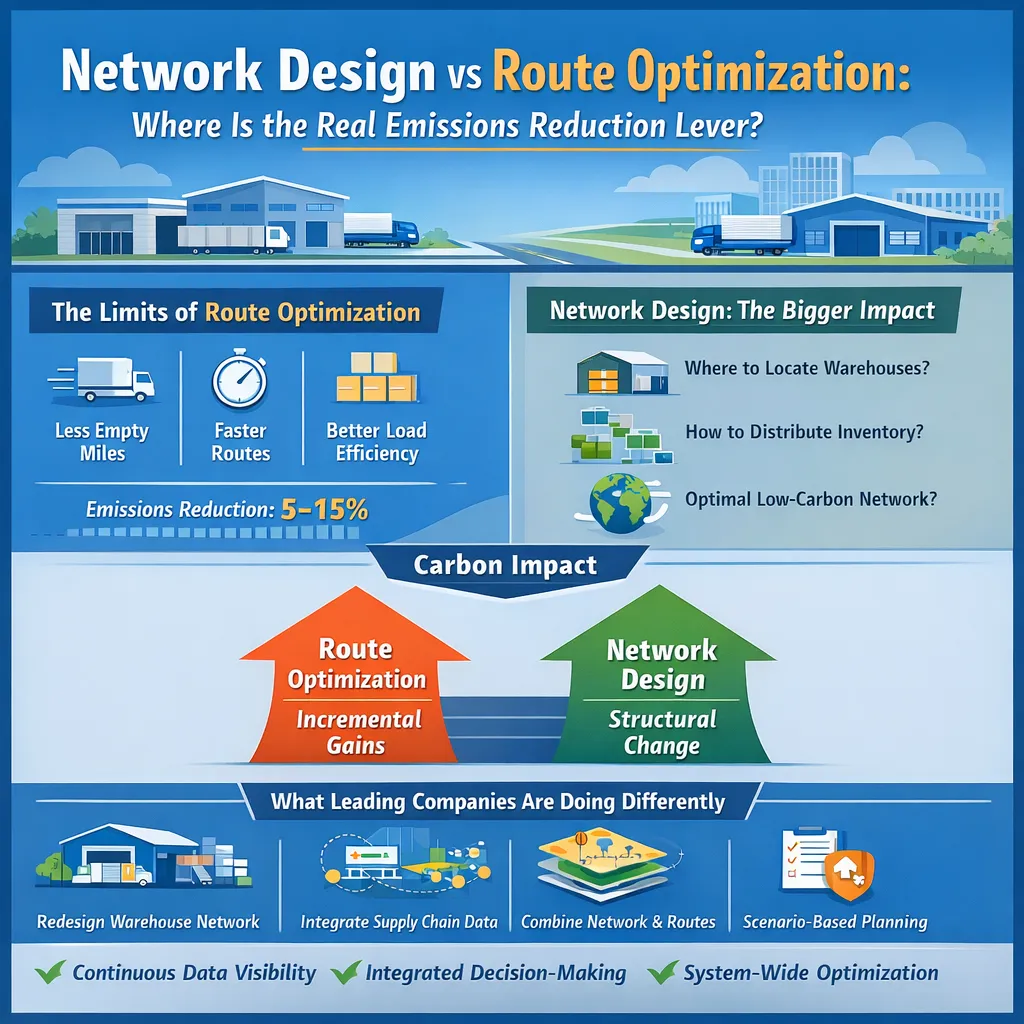
Research published in Transportation Research Record shows that freight route optimization emissions strategies focus on reducing empty miles, improving load efficiency, and choosing shorter or faster routes. These deliver quick wins, but they operate within a fixed structure. Studies suggest that route optimization can reduce emissions by 5–15%, depending on maturity.
Why Network Design Drives Bigger Impact
Network design emissions reduction looks at the bigger picture. It answers fundamental questions:
- Where should warehouses be located?
- How should inventory be distributed?
- What is the optimal low-carbon supply chain network structure?
These decisions define the distribution network carbon footprint.
Research on green supply chain network design indicates that warehouse location decisions significantly impact transport distances, mode selection and last-mile complexity.
Route Optimization vs Network Design Carbon Impact
While route optimization improves efficiency within the network, network design transforms the network itself.
- Route optimization = incremental gains
- Network design = structural change
Leaders in logistics network decarbonization are doing both, while prioritising network design first.
What Leading Companies Are Doing Differently?
They are moving from short-term fixes to long-term planning. They redesign distribution networks, reduce unnecessary nodes and optimize warehouse placement. They measure supply chain network carbon, not just transport emissions. Route optimization is then layered on an efficient network with every decision tested for cost, service, and emissions impact.
The Real Gap: Execution
Most organisations understand logistics network decarbonization. But only a few execute it well. This happens because: data is siloed, network decisions are static, and emissions are not built into planning.
This leads to suboptimal outcomes.
Network design emissions reduction requires: continuous data visibility, integrated decision-making and strong alignment between operations, logistics, and sustainability teams.
This is where Fitsol plays a critical role. It enables companies to evaluate network design and route optimization together, connecting warehouse location emissions, freight flows, and supply chain network carbon into one decision layer. It shifts the focus from isolated improvements to system-wide optimization.
Conclusion
The companies that will lead are not just optimizing routes. They are redesigning their networks. Because real emissions reduction does not come from doing the same things better. It comes from designing better systems.
FAQ
What is network design emissions reduction?
Network design emissions reduction refers to lowering logistics emissions by optimising the structure of the supply chain network including warehouse locations, inventory placement, transport distances, and distribution flows.
How does route optimization reduce emissions?
Route optimization reduces freight emissions by improving delivery routes, minimising empty miles, increasing load efficiency, and lowering fuel consumption across transport operations.
Should companies prioritise network design before route optimization?
In most cases, yes. Network design creates the structural foundation for lower-emission logistics, while route optimization improves efficiency within that network. Leading companies use both, but prioritise network design for larger long-term impact.