

A note from our founder…
As we close this financial year, what stands out most is the pace of execution. This has been a year of building, expanding our client base, strengthening our platform, entering new markets, and scaling both our team and our impact. None of this happens without the collective effort behind it. I’m deeply grateful to our team for pushing through complexity, to our clients for trusting us with critical sustainability journeys, and to our partners for enabling us to grow faster and smarter.
At the same time, this journey has required difficult decisions and constant recalibration. Growth is never linear, and building in a space as evolving as decarbonization comes with its share of challenges. What we’ve learned this year is that impact is not driven by intent alone, it is built through systems, discipline, and consistent execution. As we move into the next financial year, our focus remains unchanged: to simplify carbon management, enable real operational action, and build solutions that scale with our clients’ needs. The momentum is strong, but more importantly, the direction is clear.
Anand Pathak,
CEO, Founder
How the Year Shaped Up
This financial year has been marked by strong momentum across capital, markets, technology,and impact.
We strengthened our financial position with a ₹22 Cr CCD raise and are currently in advanced discussions with institutional investors for the next phase of growth. At the same time, Fitsol expanded into the U.S. market through operations with Padmini VNA for Ford, marking a key milestone in our international journey.
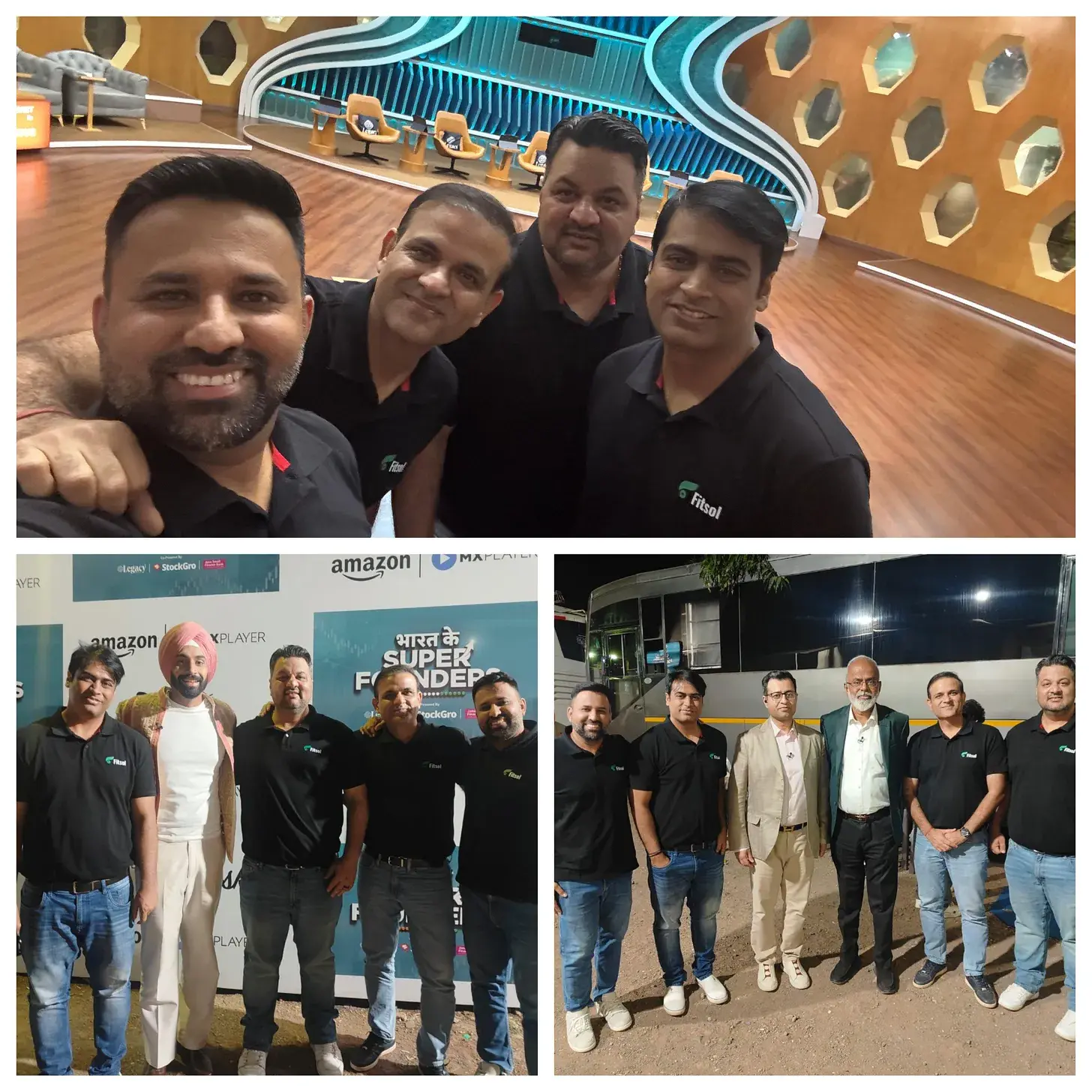
On the product front, we built a patented packaging asset designing tool, creating a differentiated technology advantage in sustainable packaging and logistics optimization. This was complemented by growing industry visibility, being featured on Bharat Ke Super Founders, representing Fitsol at CEPA, and being recognized as a winner at Mumbai Climate Week hosted by the National Stock Exchange.
Our partnerships and commercial momentum also saw strong progress. We onboarded leading OEMs including Ashok Leyland, TVS Motor, and Mahindra, expanded to 40+ clients, and built a 100+ partner network. We are on track to close FY26 with approximately ₹60 Cr in revenue.
Our focus on impact remained central. This year, we enabled the avoidance of approximately 20 Mn KgCO₂e through packaging deployment. To date, Fitsol has helped manage nearly 0.56 Bn KgCO₂e, with a clear ambition to become net zero within the next two years.
Alongside this, we scaled our organization to a 100+ member team and moved into a new office, reflecting the pace of growth and execution across the business.

Key Shifts This Financial Year in Sustainability
Global Shipping Moves Toward Mandatory Decarbonization
This financial year marked a major shift as the International Maritime Organization advanced a global framework to reduce emissions from shipping, one of the most complex sectors to decarbonize. With fuel standards and carbon pricing mechanisms on the horizon, emissions across global logistics are moving from voluntary action to regulated accountability. For businesses, this means supply chain emissions are no longer indirect, they are measurable, reportable, and increasingly enforced. The focus is now on operational efficiency, cleaner fuels, and data-driven decision-making across logistics networks.
Source: ESG News
Carbon Becomes a Trade and Competitiveness Factor
Carbon is no longer just a reporting metric, it is increasingly influencing global trade. With mechanisms like carbon border adjustments gaining traction, exporters are facing new pressures to measure and manage emissions to remain competitive. For Indian businesses, this means sustainability is directly linked to market access and cost structures. The shift is clear: emissions data is becoming as critical as financial data, and decarbonization is now tied to long-term business resilience and global positioning.
Source: Reuters
Global Climate Momentum Shifts from Pledges to Implementation
This financial year saw renewed global climate momentum, with COP30 reinforcing a clear shift from long-term commitments to near-term implementation. Countries advanced transparency frameworks under the Paris Agreement, strengthening how emissions are tracked, reported, and verified across economies. At the same time, climate finance and adaptation targets were expanded, signalling increased pressure on nations, and businesses, to move from ambition to measurable action. The direction is clear: sustainability is becoming more structured, data-driven, and accountable. For companies, this means building systems for continuous emissions tracking, reporting, and reduction is no longer optional, it is foundational to staying aligned with evolving global climate frameworks.
Start your decarbonization journey with Fitsol today.