

What’s new at Fitsol
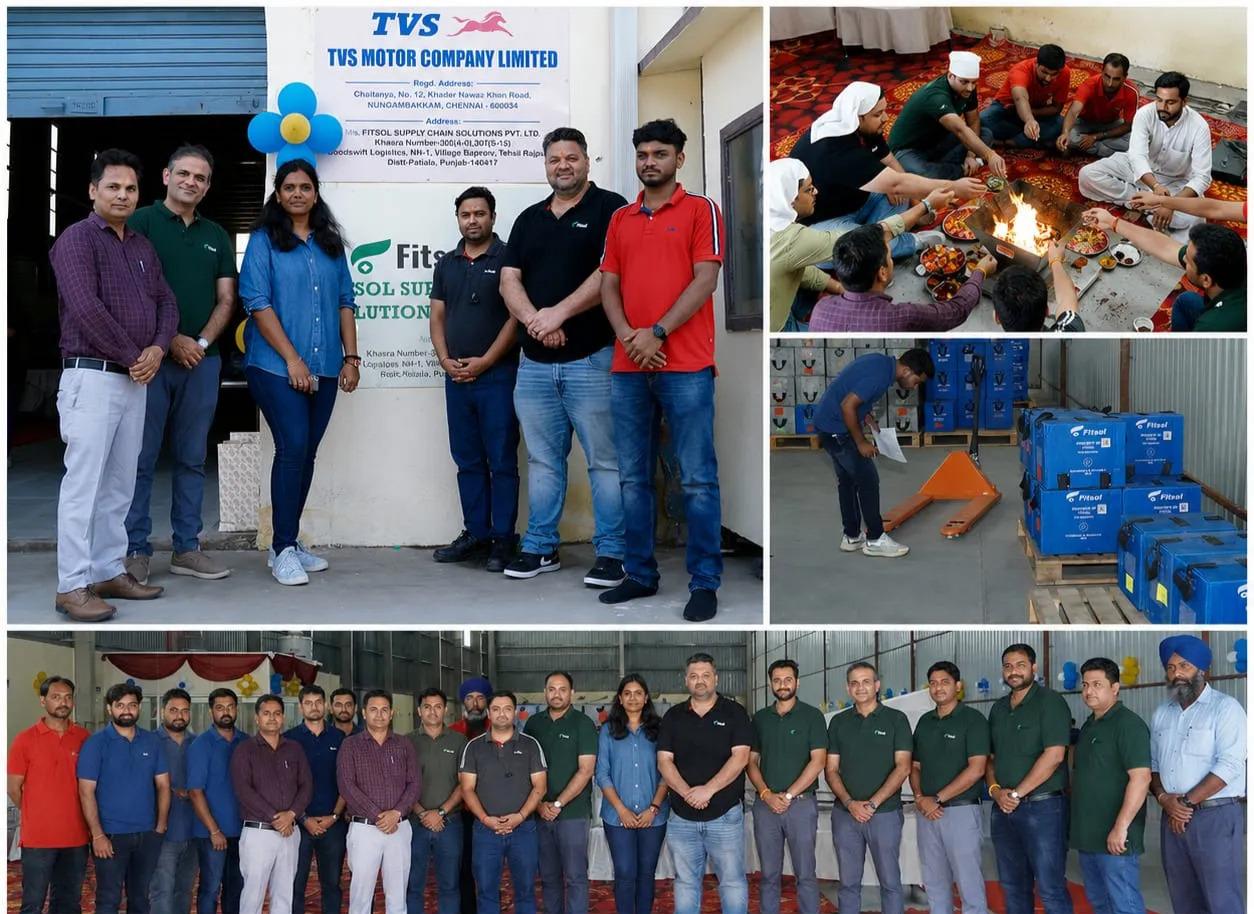
Fitsol Opens New Warehouse in Rajpura, Punjab for TVS Motor Company
Fitsol has inaugurated a new warehouse facility in Rajpura, Punjab, supporting TVS Motor Company’s operations in the HP region. The facility extends Fitsol’s returnable packaging and green logistics network to 12+ active warehouses and 20+ operational locations across India — infrastructure that lets manufacturers execute sustainability commitments on the ground, not just report on them. Fitsol plans to add 5–6 new warehouses in FY27 as part of its continued expansion.
Fitsol Selected for Google for Startups Accelerator: India 2026
Fitsol has been selected for the Google for Startups Accelerator: India 2026, one of 20 startups chosen from roughly 2,500 applications and recognised as an AI-first company solving a climate problem. Over the next three months, Fitsol will work with Google’s AI stack and technical mentorship to strengthen its carbon intelligence platform — turning fragmented supplier data, invoices, and ERP records into auditable Scope 1, 2, and 3 emissions numbers. The programme’s focus areas for Fitsol are handling messier data with less manual effort and making audit-ready compliance the default, not an afterthought.
Fitsol CTO & Co-founder Akshay Tandon Featured in Analytics Insight’s 40 Under 40
Most companies have a decarbonisation target and no way to actually execute on it — that’s the exact gap Akshay Tandon, Fitsol’s CTO and Co-founder, has spent the last four years building Fitsol to close. In this feature for Analytics Insight’s 40 Under 40 (North Edition, July 2026), he breaks down why AI’s real value lies in converting fragmented supplier data into actionable emission hotspots — not in chasing AI trends for their own sake. A sharp read for anyone trying to separate real decarbonisation execution from the noise.
2°Talks: Sustainable Materials, Lifecycle Thinking & Decarbonisation — A Conversation with Dr. Ramya Ahuja

In this episode of 2°Talks, Fitsol CEO Anand Pathak speaks with Dr. Ramya Ahuja, Founder & Principal Scientist at Ramya.Materials, about why material choice is often the most overlooked lever in supply chain decarbonisation. The conversation covers sustainable materials, lifecycle thinking, and what it takes to move decarbonisation strategy upstream — to the material itself — rather than stopping at emissions reporting and supplier scorecards. Listen to the full episode to hear how material-level decisions shape a product’s carbon footprint before it’s even made.
Upcoming Webinar & Events
The Carbon Table Session 5: Decarbonising Automotive Supply Chains
Automotive suppliers face mounting pressure from OEM mandates, tightening regulations, and audits that increasingly don’t match self-reported numbers — yet most decarbonisation conversations stop at reporting, not resilience. Fitsol’s next Carbon Table session, “Decarbonizing Automotive: Building Resilient Supply Chains for the Future,” tackles this gap with V.K. Sharma (Mentor, ACMA Mobility Foundation) and Tarun Jha (Principal Scientist & Founder, Helionis Labs).
Expect practical takeaways on Scope 1, 2, and 3 emissions, supplier engagement without added complexity, and what a resilient, low-carbon automotive supply chain actually looks like.
Date: 31st July
Time: 4:00-5:00pm
Register here
Fitsol Insights
Stop Guessing Where Your Emissions Are — The Decarbonisation Playbook
Most supply chain decarbonisation content stops at theory. This doesn’t. The Fitsol Playbook breaks down exactly where your emissions actually live (hint: probably not where you think), the six-step framework — Measure, Report, Verify, Reduce, Recover, Monetise — that takes a target from slide deck to shipment floor, and the five traps that stall almost every programme before it gets there. Real client outcomes included: 25–50% cost reductions, alongside real carbon cuts, not projections. If you only have time for one document on supply chain decarbonisation this year, make it this one.
Around the World: Trends Shaping Climate & Business
EU Tightens Circularity Rules for the Automotive Industry
The European Union has approved new circularity requirements for the automotive sector, pushing manufacturers to increase the use of recycled materials, improve vehicle recyclability, and strengthen end-of-life vehicle recovery. The move reinforces a growing shift towards designing products for circularity rather than treating recycling as an afterthought.
Source: ESG News
Korea Expands Mandatory ESG Reporting—Global Disclosure Momentum Continues
South Korea has significantly broadened its mandatory sustainability reporting roadmap, bringing more than 290 listed companies into scope from 2028, with the number expected to grow to over 3,100 companies by 2029. The reporting framework is aligned with ISSB standards (IFRS S1 and S2) and reinforces the global shift towards consistent sustainability disclosures. Scope 3 reporting will be phased in after a three-year transition period, giving businesses time to strengthen emissions data and reporting systems.
Source: ESG Today
Join our LinkedIn community, The Decarbonisation Exchange: Procurement · Supply Chain · Sustainability, and WhatsApp network, Net Zero Community, for ongoing discussions, insights, and updates.